 kabbos

They say hunger is the harshest of all human instincts—one that can only be tamed by death or by being fed. But what if someone managed to defy this rule? Not through madness or myth, but through a real medical experiment, conducted within the halls of a legitimate hospital, and under the supervision of scientists not prone to exaggeration.
This is the story of a man who chose to give up food. Not for a few days—but for over a year. And he didn’t die. In fact, he became more alive than ever.
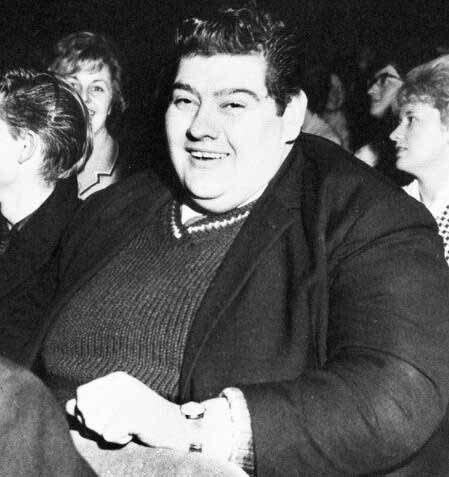
In the spring of 1965, an overweight young man walked into the Maryfield Hospital in Scotland. He looked ordinary at first glance, but his request quickly stirred astonishment among the doctors.
With a calmness that seemed strangely out of place, he said:
“I don’t want to eat anymore.”
His name was Angus Barbieri, and he weighed close to 210 kilograms (463 lbs). His body lived in constant servitude to food. His dreams were suffocated by a relentless obesity that kept him from walking, from sleeping, even from breathing without pain. But he wasn’t there to request a diet or surgery. He had come to quit food—as someone might quit an old addiction.
No one could explain why, but his words felt sincere—perhaps even desperate enough to compel the doctors to agree. Not out of belief, but out of curiosity—and under strict medical supervision.
And so, the program began.
In the beginning, Angus was allowed only water, unsweetened tea, one cup of black coffee in the morning, and essential vitamins to maintain electrolyte and mineral balance.
Doctors expected him to last a week—ten days, at most. But what happened next defied everything they knew.
Angus’s body didn’t demand food.
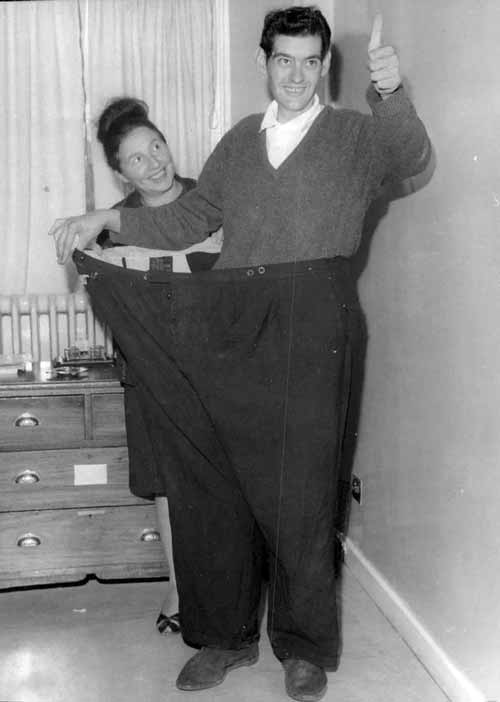
He didn’t experience withdrawal. He didn’t cry out in hunger. He didn’t beg for bread, as others had done in similar trials. It was as if his body had decided to start consuming itself—not in a destructive way, but in a remarkably rational one.
The fat that had accumulated over decades had now become his daily meal.
He began to lose weight rapidly—but without losing consciousness. His vitals were stable. Blood pressure normal. Blood sugar within range. And with each passing week, the doctors grew more puzzled… and more cautious.
Months went by.
Angus entered a state that resembled medical-level asceticism. He didn’t eat. He didn’t crave. He didn’t even remember what hunger felt like. Later, he told doctors that at some point, he had completely lost the sensation of needing food, as if his brain had been rewired.
By the final days of fasting, his body had transformed completely. He was no longer the tired, obese man who had entered the hospital. He had become so thin that it was difficult to believe he was the same person.
He seemed weightless—like a ghost stepping out of a body buried by time.
On Day 382, the fast ended.

In July 1966, Angus sat down for his first breakfast in 1 year and 17 days. It was a simple meal: a boiled egg, a slice of bread, and a bit of butter. But to him, that meal felt like a funeral for hunger itself.
He now weighed 82 kilograms (180 lbs)—having lost about 125 kg (276 lbs) without undergoing a single operation or taking a single diet pill. Just willpower… and silence.
What followed was just as remarkable. Angus didn’t suffer kidney failure. He wasn’t diagnosed with anemia. He didn’t have a heart attack, as many feared. In fact, he went on to live a mostly normal life, and he never regained the weight.
He became a rare symbol of how the human body can endure far more than we think… or want to believe.
Yet, despite its success, the experiment remained surrounded by strong medical warnings.
Fasting for such extended periods can be deadly without precise, professional monitoring.
One man survived… thousands may not.
This story is not just a challenge to human nature—it’s a challenge to the very concept of hunger.
Is hunger a true biological necessity? Or just a programmed illusion meant to keep us enslaved to food?
Can a human truly silence their appetite by will alone? Or was Angus Barbieri a one-time anomaly—a medical miracle never to be repeated?
We may never have a definitive answer.
But one thing is certain: Angus Barbieri’s name will remain etched in the annals of medical history, not merely as a record-breaker, but as a man who dared to live in a way no one was meant to live.